You’ve got a pitch deck. You’ve got early data. Maybe you’ve even got a term sheet on the table. And somewhere on your to-do list, in smaller font than it should be, sits “fix the website.”
For most biotech founders, the website gets pushed to the bottom of the list until someone asks for the link and you realize what’s live right now doesn’t reflect the work you’re actually doing.
The good news? Getting a professional website up doesn’t have to mean a six-week agency process. But it also shouldn’t mean throwing something together the night before an important meeting.
Let’s look at what you actually need and how to get there without losing months.
The real problem isn’t design. It’s time.
Most founders don’t struggle to imagine what a good website could look like. They struggle to find the hours to build one.
You’re running experiments, raising money, hiring, talking to investors, working with partners, and trying to move the company forward. Finding time to plan pages, write copy, review designs, and go through revisions isn’t easy.
So the real question isn’t: “What should my website look like?”
It’s: “How much of my limited time and budget should I spend getting it there?”
What does a biotech website actually need to do?
Before thinking about design, start with the job your website needs to do.
For most early-stage biotech and life sciences companies, it should:
- Prove you’re legitimate. When an investor, partner, or potential hire looks you up, your website should immediately show that there’s a real company and real work behind the name.
- Explain your science clearly. You shouldn’t have to simplify your science to the point that it loses meaning. But someone outside your exact field should still be able to understand what you do.
- Show your team and progress. Your science matters, but so do the people behind it. Give visitors a quick way to understand who’s building the company and what you’ve accomplished so far.
- Make the next step easy. Whether someone wants to contact you, request an introduction, learn more, or start a conversation, don’t make them hunt for a way in.
Notice what’s not on the list: Elaborate animations. Huge page counts. Complicated interactions. A completely custom design.
For an early-stage company, clarity usually matters more than complexity.
Why hiring an agency isn’t always the right call yet
A custom website from a design agency can be excellent. If your brand is established and you need something highly customized, it can absolutely be worth the investment. But a custom website also means a bigger budget, more meetings, more decisions, and usually a longer timeline.
That can be difficult when your priorities are fundraising, research, hiring, and growing the company, not spending months working through website revisions.
And your story may still be changing. Your next funding round could change your messaging. New data could change how you talk about your research. Your team could grow. Your priorities could shift.
You may not need a website built around a story that isn’t fully settled yet.
When does a custom website make sense?
A custom agency website can make sense when:
- Your brand and messaging are already well established.
- You need functionality that a template can’t provide.
- You have the budget and time for a custom project.
- Your website is a major part of your business or customer experience.
But if your immediate goal is simpler- to look credible, explain your science, and get your company online quickly- you may not need a months-long website project.
That’s where a good template can make sense.
The middle path: a premium template built for biotech
We’re not talking about a generic drag-and-drop template designed for everyone. A good biotech template should already consider what companies in this space need to communicate: research, pipeline, team, technology, publications, partnerships, and credibility.
The biggest advantage is that you’re not starting from a blank page.
- You can launch faster. The basic structure is already there, so you’re not spending weeks figuring out what pages you need or where everything should go.
- You spend less. A template can give you a professional starting point without the cost of a fully custom website.
- You don’t have to design everything yourself. The layout, typography, spacing, and page structure have already been thoughtfully designed.
- You can still make it yours. Change the colours, fonts, images, and copy. Add your own content and make the site feel like your company.
You’re buying the framework, not a website that has to look exactly like everyone else’s.
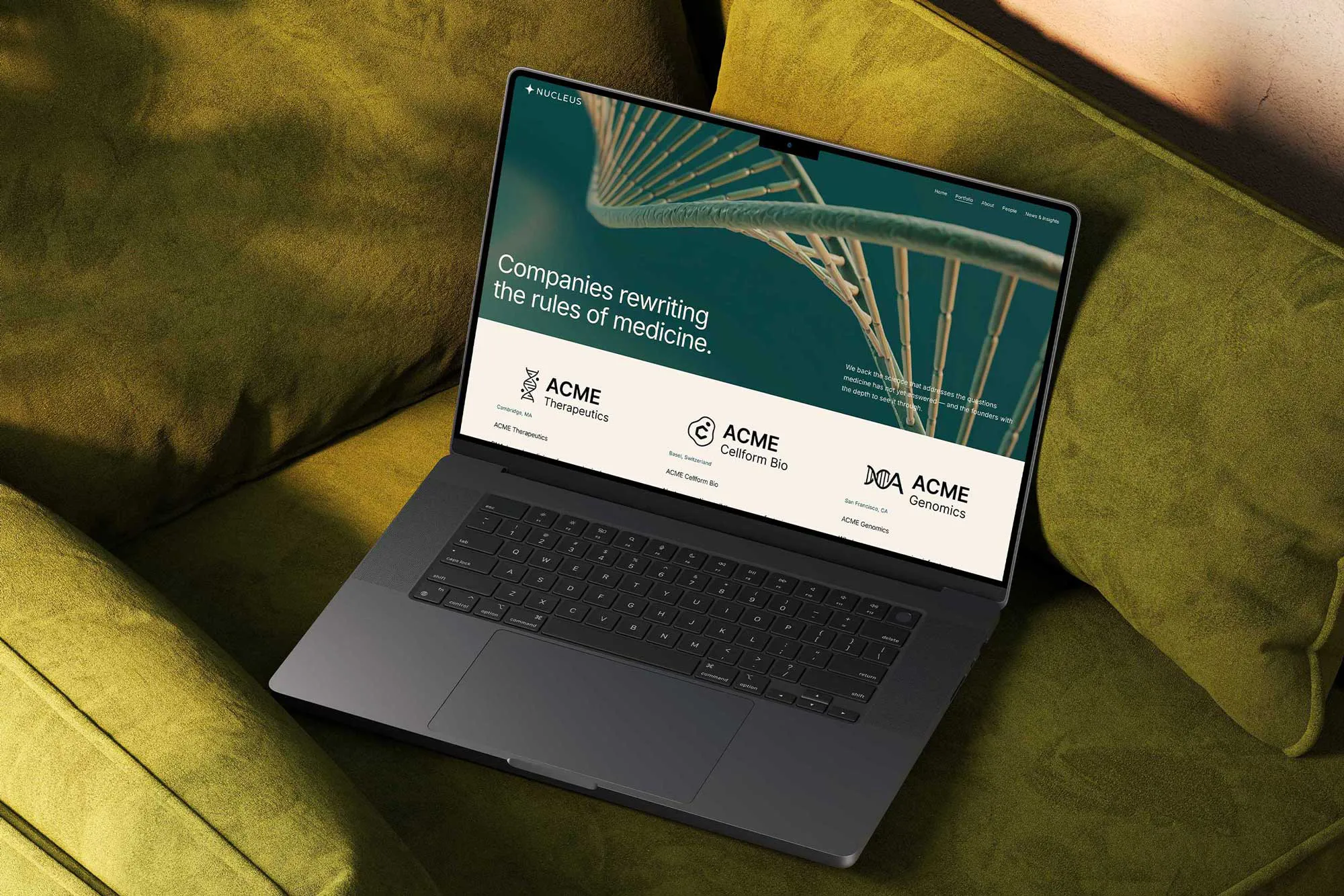
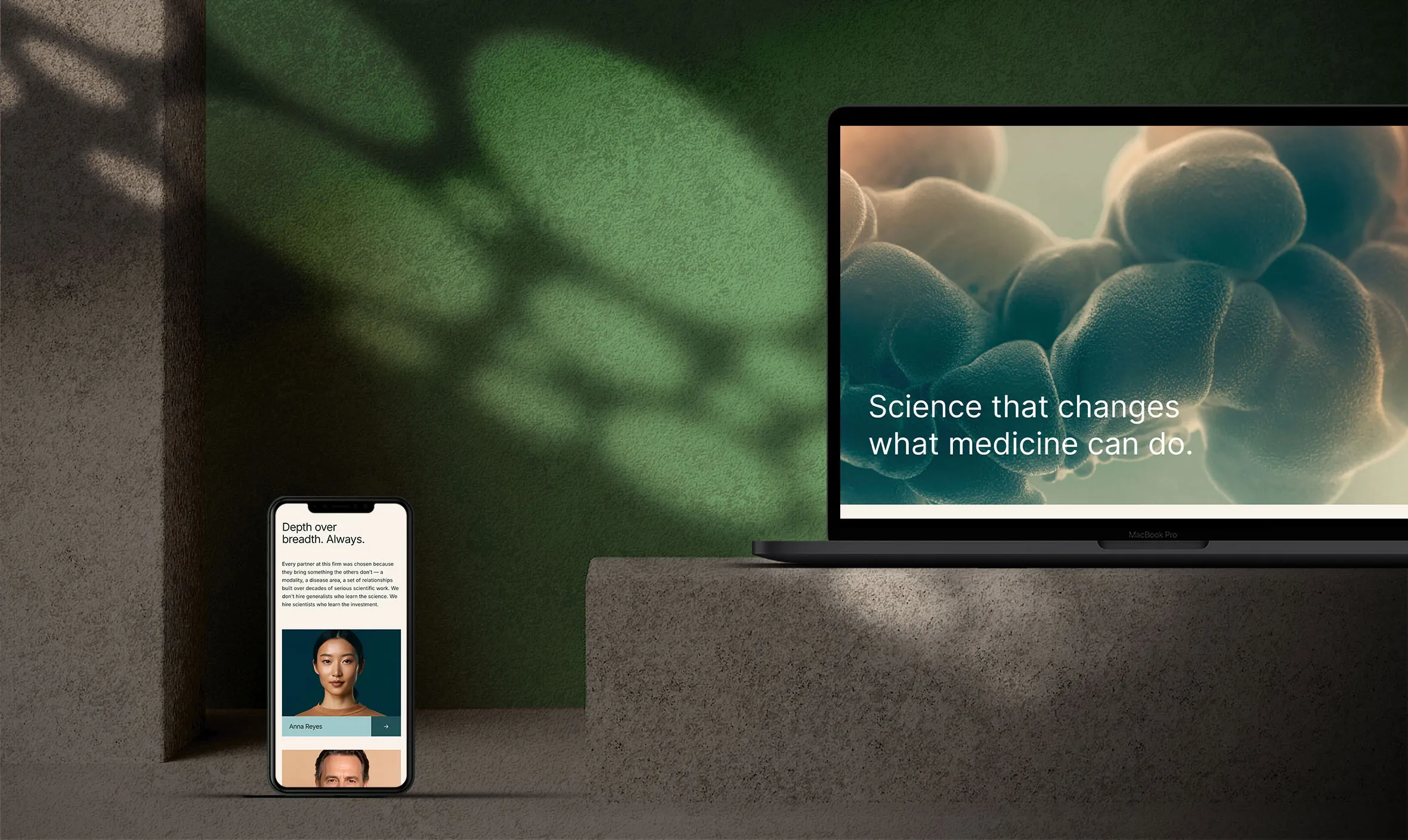
We built Nucleus with this idea in mind: a Squarespace template designed for biotech ventures, labs, and life sciences companies that need to look established without spending months on a custom website.
What should you look for in a biotech template?
Before you buy any template, take a few minutes to check the basics.
- Does it look good on mobile? Your website should feel professional whether someone visits from a laptop, tablet, or phone.
- Is it actually built for biotech? A template made for an online store or creative portfolio may look beautiful, but that doesn’t mean it has the right structure for your research, pipeline, team, and scientific content.
- Can you edit it yourself? You shouldn’t need a developer every time you want to update your team page, add a publication, change your copy, or upload new research.
- Is it built for the current Squarespace platform? Make sure you’re buying a template that works with the current Squarespace tools and gives you the flexibility to customize your site as your company grows.
You don’t need a perfect website. You need a ready one.
Your website doesn’t need to tell your entire company story.
It needs to make a strong first impression, explain what you do clearly, and give people a reason to learn more.
For many early-stage biotech teams, a well-built template can be a practical way to get there without pulling focus from the actual work- the science.
That’s exactly why we built Nucleus.