Investors, partners and candidates tend to look at your website before they speak to you. A biotech website rarely fails in an obvious way. It fails quietly: a meeting that never gets booked, a question that goes unasked, a first impression that sets the wrong tone.
Building your own site is a reasonable choice, and plenty of teams do it well. These are the five mistakes that cost the most, how to avoid each one, and when it is worth getting help instead.

1. Leaving placeholder content on the live site
This is the most common mistake and the easiest to prevent. Demo text, stock logos, sample quotes and example figures are meant to be replaced. When they are not, a visitor sees something that looks unfinished, or worse, a claim that is not true.
Why it is expensive: A placeholder logo or invented testimonial can read as fabricated, and it is hard to recover trust once a reader has noticed.
How to avoid it: Before you publish, go through every page and list each image, number, quote and logo. Mark whether it is real, verified and approved for public use. Delete anything that is not. A shorter, accurate page beats a fuller one with filler.
2. Claims and data you cannot support
Biotech websites carry more risk here than most. A chart with a cropped axis, a phrase that implies clinical progress, or a figure with no source can damage credibility with exactly the people you are trying to reach. It can also create regulatory or legal problems.
Why it is expensive: Scientific readers notice unsupported claims quickly. Fixing a compliance problem after publication costs far more than checking before.
How to avoid it: Label every chart with axes, units and a source. Describe your stage and results in plain, accurate terms. Have a lawyer or compliance adviser review anything about performance, fundraising, efficacy or clinical use, since the rules vary by region and firm type.
When to get help: If you are unsure how to present sensitive data, an experienced designer who has worked with regulated industries can structure it so the message is clear and the review is straightforward.
3. Generic or unlicensed images
Handshakes, glass offices and generic molecular graphics could belong to any company. They say nothing about your work. Unlicensed images are a separate problem: a photo used outside its licence can lead to a takedown request or a bill.
Why it is expensive: Generic imagery weakens your credibility, and a licensing dispute costs time you do not have.
How to avoid it: Use your own photos and diagrams first, then commissioned work, then reputable licensed libraries for atmosphere only. Keep a simple list of where each image came from and under what licence. Never present AI-generated images as real lab, microscope or patient photos.
4. A story that is hard to follow
Most biotech teams know their science deeply, and that can make it hard to explain. A homepage full of jargon, or one that tries to speak to every audience at once, leaves visitors unsure what you do and whether it concerns them.
Why it is expensive: A visitor who cannot tell what you do in a few seconds will not scroll to find out. They will close the tab.
How to avoid it: Write for one primary reader per page. Open the homepage with a plain statement of what you do and why it matters, then add proof you can verify. Define specialist terms the first time you use them. Our guide to what to write on a biotech VC website walks through this page by page.
When to get help: If you are still working out your positioning, that thinking should happen before any design. A designer or strategist can lead it, which is often cheaper than redesigning a site built on an unclear message.
5. No clear next step
A site can look excellent and still fail if a visitor cannot tell what to do next. A hidden contact link, three competing buttons, or a form that asks for too much all stop interested people from getting in touch.
Why it is expensive: Every enquiry that never arrives is a conversation you did not get to have. You will not see it in any report.
How to avoid it: Give each page one clear action. Put your contact route in the main navigation, and say what happens after someone reaches out. Only promise a response time you can keep. Test the whole path yourself on a phone, from landing on the page to sending a message.
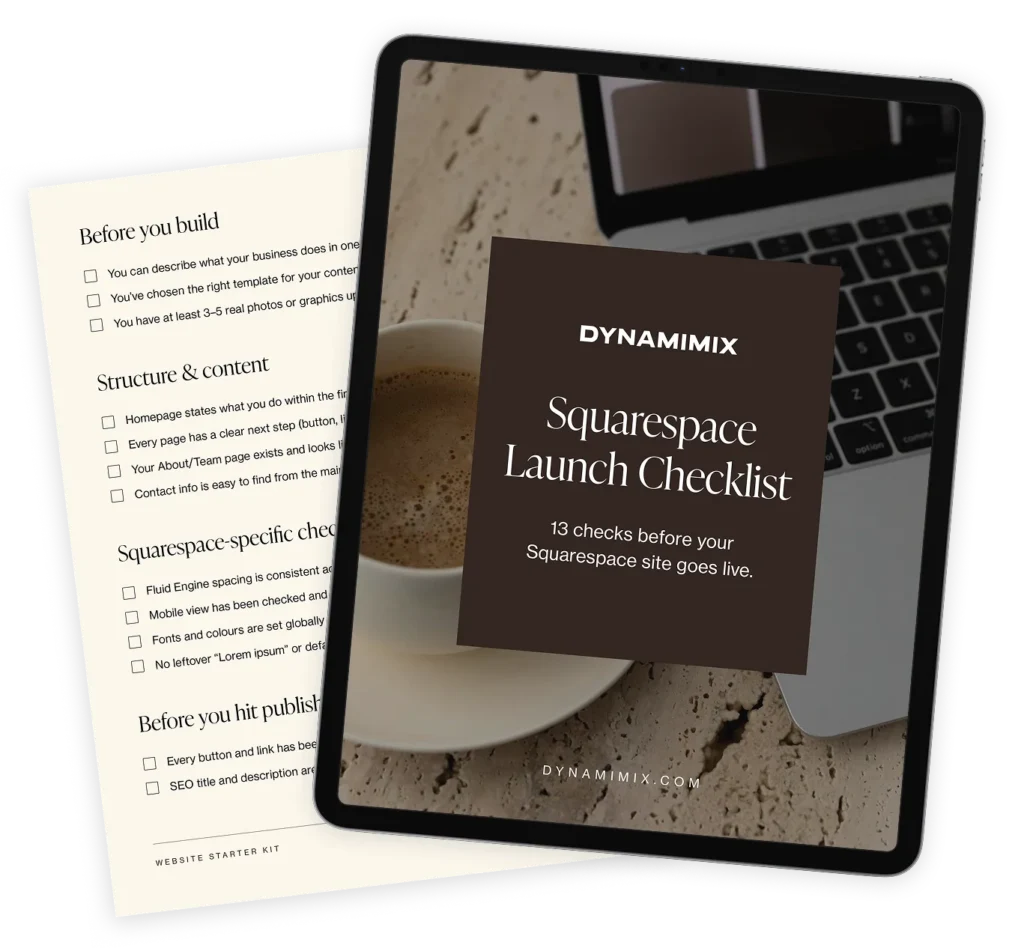
A quick pre-launch check
- Every image, figure, quote and logo is real, verified and approved.
- Every chart is labelled, sourced and permitted.
- Every image has a recorded source and licence.
- A non-specialist can say what you do after ten seconds on the homepage.
- Every page has one clear next step, and the contact route works on mobile.
- Legal or compliance review is done for anything sensitive.

Should you build it yourself or hire help?
Neither choice is wrong. A template suits teams that can write their own content and want a fixed cost and a fast start. Custom design suits teams with a hard-to-explain story, a rebrand, or a launch or funding conversation that depends on the site. Our guide to choosing a biotech website template or custom design helps you decide, with four questions to answer for your own situation.
Want it handled for you? Getting the message, structure and review process right is often the hardest part. If you would rather work with someone who can shape the story, design the site and handle the build, talk to us about a custom project, or see what is included on our Services page.
Building it yourself? Nucleus is our Squarespace 7.1 template for biotech and life sciences firms. It gives you the pages and structure already in place, so your time goes into content. Hosting and a domain are not included. Nucleus is $349. Explore the Nucleus template →